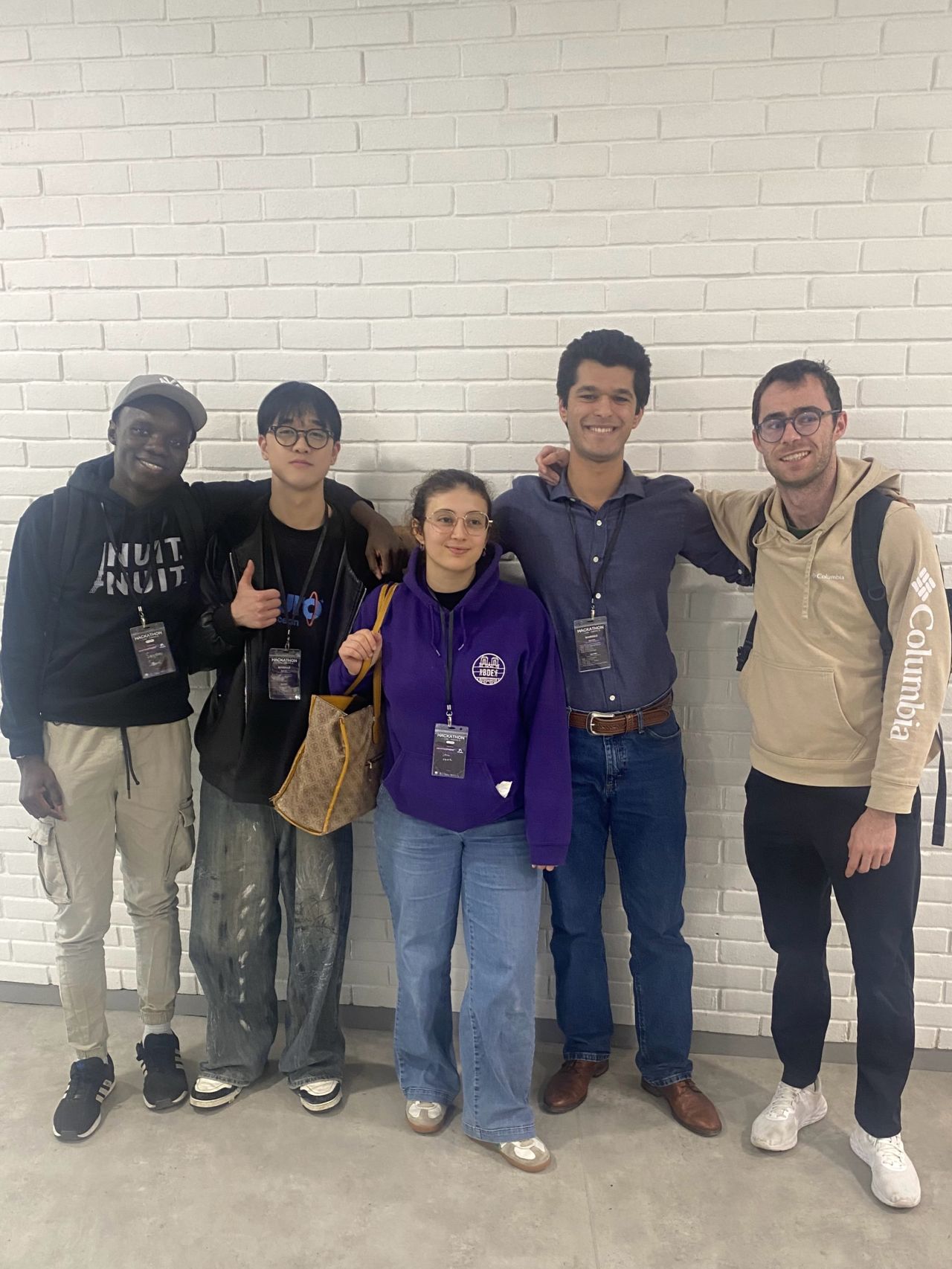
“From LLMs to AI Agents” Hackathon
Yongkang Zou · 2025-04-06 · hackathon · RAG
Last weekend, our team competed in the first edition of the Utopia and KRYPTOSPHERE® AI Hackathon, 'From LLMs to AI Agents'. We built an app called OnTrack and took home second place in our track.
We had less than 24 hours to build it and survived on about 1.5 hours of sleep. The team consisted of Briac Sockalingum, Sara Feore, Thomas Noel, Seydou Laara Sene, and myself.
Mapping the University Path
OnTrack is designed to help high school students figure out the exact steps needed to get into their target universities. To make this work, we needed a system that could read academic transcripts, research specific universities, and generate concrete study plans.
We decided to build a multi-agent system to handle these distinct tasks.
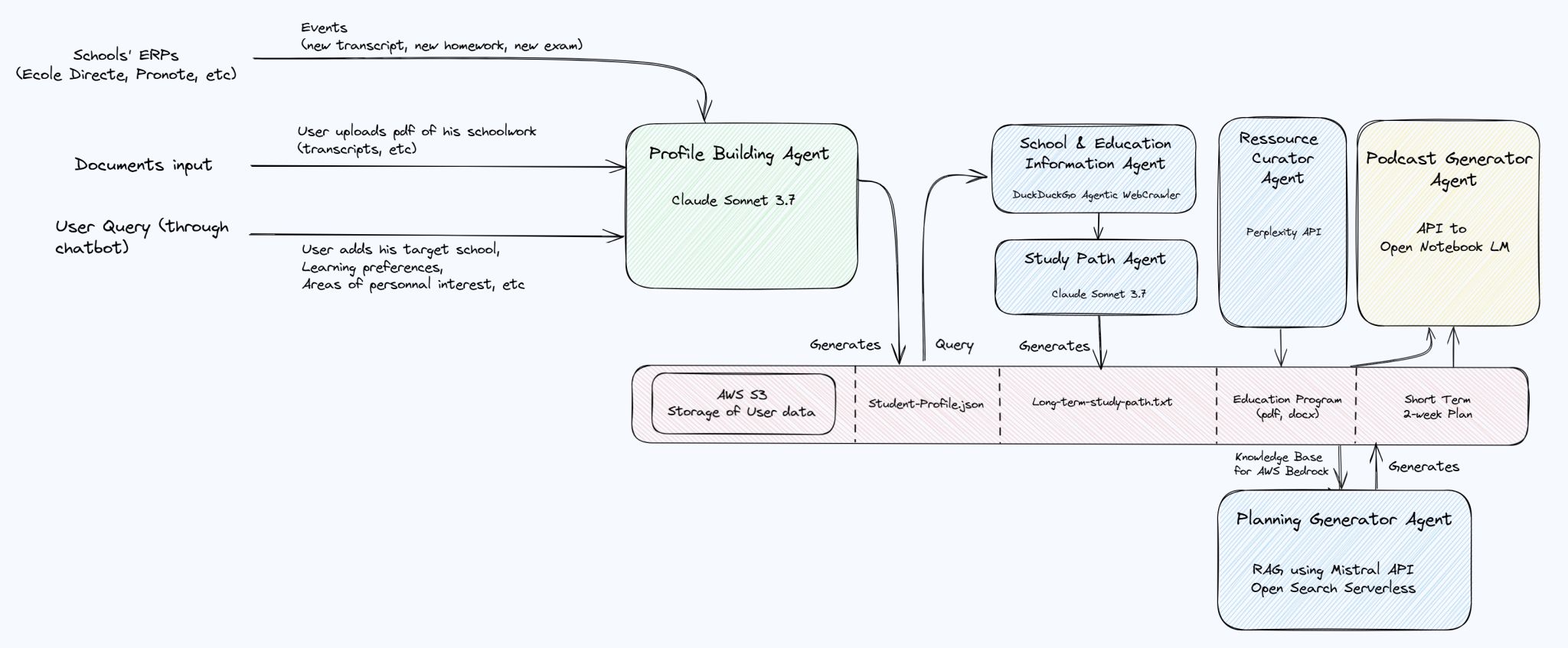
The complete multi-agent architecture for OnTrack, from document input to final study plan generation.
We built a central orchestrator to manage workflow and automation. This orchestrator routes requests and data between several specialized agents.
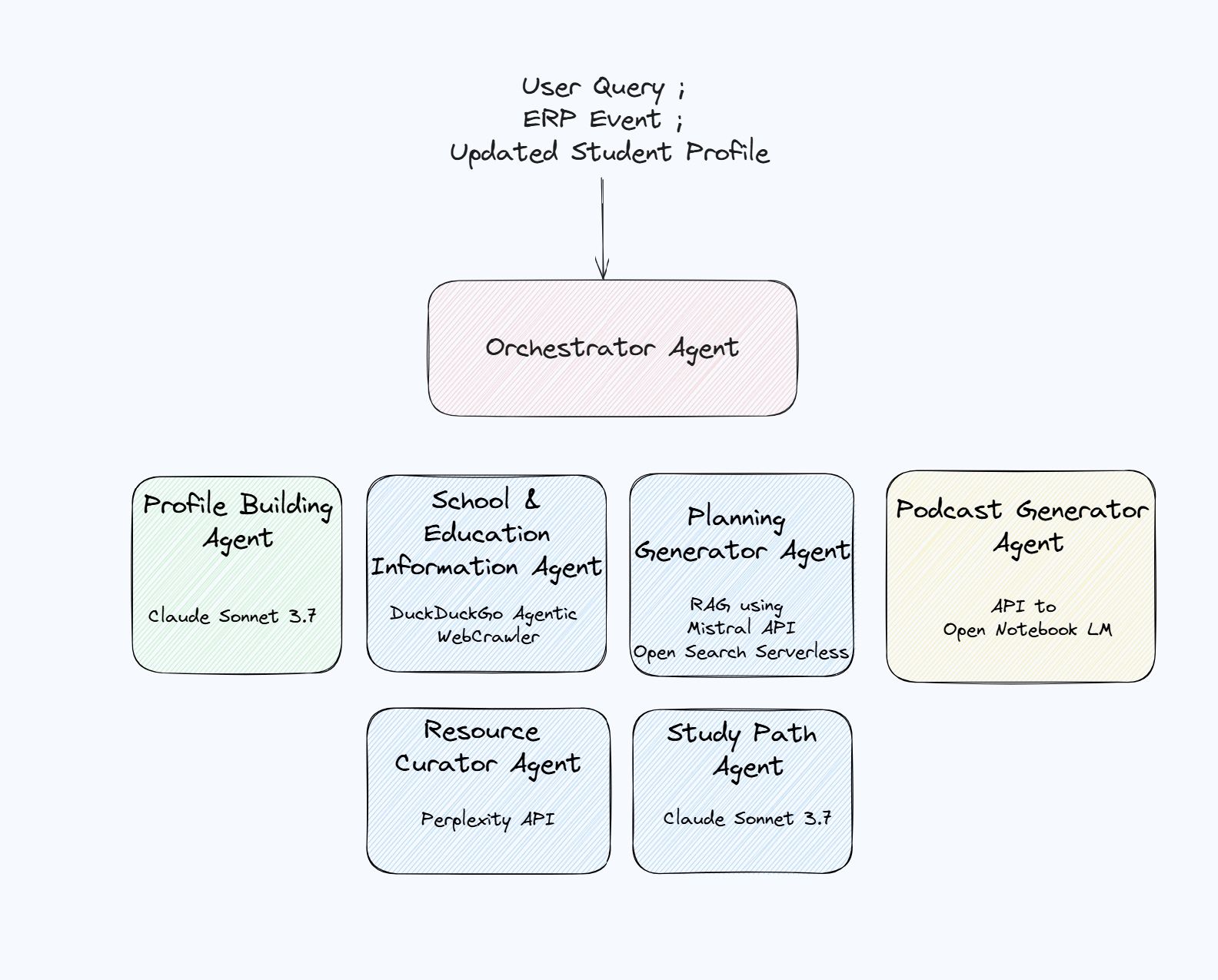
The central Orchestrator Agent managing communication between specialized sub-agents.
The first component is the Profile Building Agent. We used the Claude-3 Sonnet model via AWS Bedrock for this. It parses uploaded transcripts and extracts the data to create personalized student profiles.
Next, we implemented a DuckDuckGo web agent. This agent acts as a crawler to gather current information and admission requirements for the student's target university.
Finally, we built a Planning Generator Agent using Retrieval-Augmented Generation (RAG). We set up AWS OpenSearch Serverless and used the Mistral AI LLM to cross-reference the student's profile against a high school curriculum knowledge base.
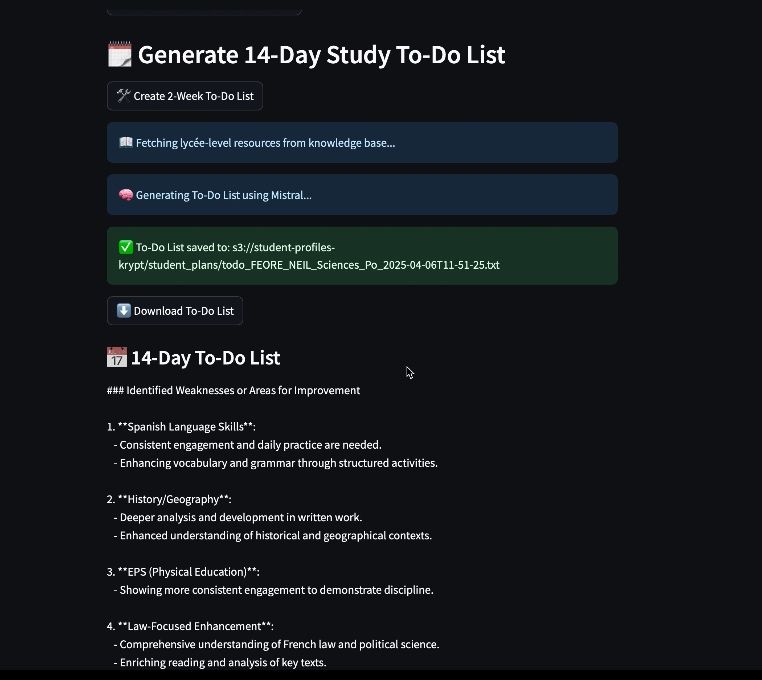
A personalized 14-day study plan generated using RAG and Mistral AI.
This pipeline allowed us to generate detailed long-term study paths alongside highly specific, two-week study plans based on the student's actual weaknesses.
Choosing Our Stack
This was my first time working extensively with several of these AWS services. The tutorials provided by the organizing team were incredibly helpful for getting up to speed quickly and streamlining our implementation.
We actually explored other ecosystems first. We looked at NVIDIA NeMo and Waterflai AI. Tarek Makaila was especially helpful while we evaluated Waterflai. Ultimately, we chose AWS because it offered the right balance of ease and scalability for our tight 24-hour deadline.
Building a complex system under extreme time pressure pushes your technical boundaries. You have to make quick decisions about what to build and what to cut. I am proud of the system we put together and grateful for how well the team collaborated.
A quick thanks to the partners who made the event happen: Ledger, France 2030 x ESSEC Metalab Institute, Bpifrance, Mistral AI, AWS, Google Cloud, NVIDIA, Kima Ventures, Entrepreneurs First, Paris Blockchain Week, and RAISE Summit.
Photos